
Astrology: How to Hack Your Neurodivergence – and Help Your Neurodivergent Loved Ones
Updated: Sep 17
In this article, you can read about how we can use astrology to make a neurodivergent person’s life far easier and to help them understand themselves (or you understand yourself, if you’re neurodivergent). Regardless of what your relationship with the ND person in your life is, this article can help you make a real difference in their lives… and, if you send it to them, can help them directly as well.
Note: I’m neither a medical doctor, nor a licensed psychologist or psychiatrist, so this isn’t medical advice. I also do not recommend replacing medical diagnostics with astrology.
Shortcuts:
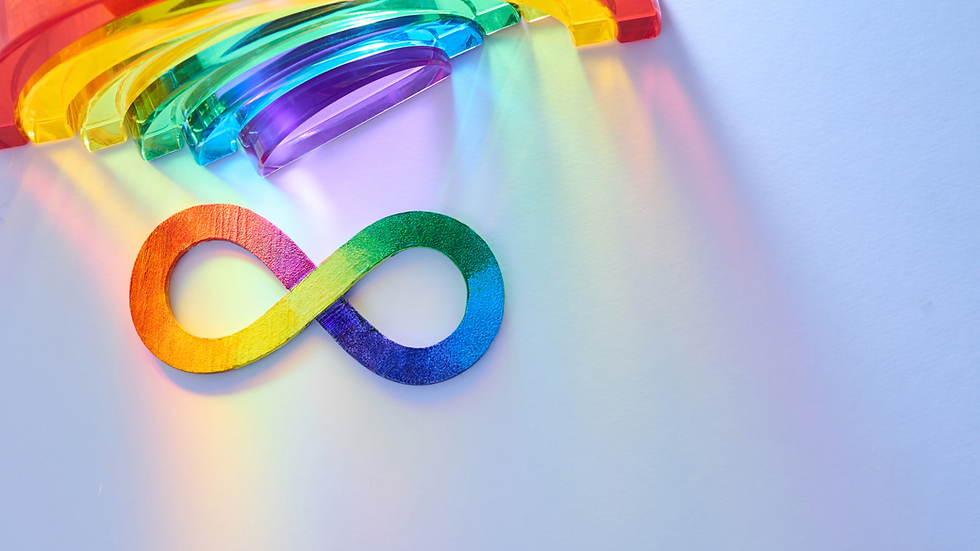
What is Neurodivergence?
Neurodivergence means that someone’s brain is a lot more different from the average than is usually the case – and that’s accounting for the fact that each brain is unique. If you see neurotypicals as a family of songbirds, the neurodivergent is the owl… or the penguin. Also a bird, but definitely not the same kind. Not broken, just different – and that difference means certain abilities or environments are easier or harder than for songbirds/neurotypicals.
There are several neurodivergences that are common:
ADHD (Attention Deficit Hyperactivity Disorder): Difference that affects ability to concentrate (at all/on what you’re supposed to focus on/shifting focus) and organize. Hyperactivity may or may not be present with this diagnosis. Other effects (such as on emotional processing) apply.
ASD (Autism Spectrum Disorder, commonly known as Autism or The Spectrum): Extreme difference of processing, often leading fixed interests and behaviors, struggles with social life or context clues, and difficulty with handling change. However, ASD can come with gifts connected to interests, bottom-up processing, and/or regarding pattern recognition.
AuDHD: The combination of ADHD and Autism in the same person. Symptoms of one may either ameliorate or worsen the other.
Giftedness: An IQ above 130 – higher than usual intelligence, but also struggles connected to thinking extremely differently from everyone else, including in emotional and social realm.
Learning Challenges: Certain learning disabilities/challenges such as dyslexia (with reading and writing) or dyscalculia (mathematics) can also count as neurodivergences.
Certain physical/medical diagnoses, such as Hypermobility Spectrum Disorder or Ehlers Danlos Syndrome, make it more likely to be diagnosed as neurodivergent.
This is not a comprehensive list.

The Struggle – and How Astrology Can Help
In my work with astrology, I have had the privilege of sitting with an immense amount of neurodivergent people. I'm also both related to, and friends with, and in professional relationships with, people with various neurodivergent diagnoses. To my immense surprise, astrology became one of the most helpful (non-psychiatric and non-medical) tools that helped them thrive for long-term… probably because the astrology of your birth chart reflects what your non-negotiable needs are and always were, even before you were conditioned to handle life like so.
Many people with neurodivergences struggle in life because they don’t really know what their non-negotiable needs are – not a surprise given that the world, including the people and institutions that raised and educated them, showed them how the world around them works and how they have to behave, have different needs and expect the neurodivergent person to be the same as they are. Only, they are not. In other words, neurodivergent people are given a playbook for a life that’s contrary to their true needs and abilities… and then are both judged and judge themselves for not responding to the “right” way to do things the same that “everyone else does.” Give that a couple of years or decades, and their internal compass for what they need or not is skewered – and it’s left to the neurodivergent person to eventually figure out how to set it right again. And that’s even harder than it sounds like, because they’re not only given the wrong playbook and severely lacking in role models, they also have to work against judgment and societal pressures for trying life outside the mold to find what works for them.
Enter astrology: as your birth chart is the cheat sheet for what works for you and what doesn’t, we can cut through the noise and more easily find out how you can help yourself – or your ND loved one – in profound ways. The following is a preview to give you an idea of how astrology can help, including with practical tips and some example interpretations that you can apply right away.
For a true comprehensive analysis, feel free to book a 1-on-1 session for yourself or your loved ones!
So, here are some practical ways how you, as a neurodivergent person or someone who loves a neurodivergent person, can get ahead and help them by looking at their astrology.

Differences: Understanding Them and Using Them for Good
Part of a neurodivergent’s biggest challenge is to figure out where they’re different, why they’re different, and what to do with that difference – both in terms of accommodation and using your uniqueness in a productive, helpful way where that’s possible. This is where Pallas and Uranus come in.
Pallas: How to “Hack” Your/Their Differences
Pallas is an astrological asteroid that, essentially, shows us how we can use differences and uniqueness in strategic, wise, and healthy ways to get us ahead. It’s also a strong significator for how neurodivergence impacts you and which gifts and challenges are associated with that (if a ND is present, which only a trained professional can diagnose). The immense gift that Pallas in the chart brings us is practical in nature and useful, though we sometimes first have to create the environment and circumstances so that the blessing can unfold (rather than the weaknesses). Many people with a strong Pallas are ND, but not all of them, so please don’t use this point to self-diagnose.
Pallas also shows you which areas of life need your focus so you can thrive as a neurodivergent person (if you are one) and use your differences in the best way possible (regardless of whether you are/aren’t ND).
Example: With Pallas in the 4th house, you need time at home and a home-life that’s strongly tailored to your neurodivergence, from the interior design to where the home is and how much time you can spend there. Family life is also affected by this. You can access your gift zone the best if this area of life works well. If Pallas is in your 2nd house, your financial life, material foundation, and system of values and morals is a necessity for you to maintain so you can step into your gift zone more. Having to go against your conscience would be physically painful, and it would be a lot more finetuned than for others. Money-matters affect you more strongly here, and so does food.
Uranus: Where Differences Most Play Out
Uranus is the planet of differences and being unique: what it touches in your chart, it revolutionizes. Here, we have a stronger drive to walk our own path and go against the flow, even to rebel in small or big ways. We need freedom and we need to reimagine life and step away from the cookie-cutter. However, that doesn’t mean we have to throw the baby out with the bathwater. Sometimes, Uranus can bring us back to tradition that we then live in a quite intense way, if that tradition is what works for you as an individual. If it doesn’t, it breaks you out of the tradition. Uranus may also require us to be more extreme and/or more flexible in a certain area of our life. Accommodating your differences here is key for a good life and avoids trouble.
Example: If Uranus is in your 3rd house, which deals with learning and communication, both the ways you express yourself and the ways you learn need to be tailored to your uniqueness and unique needs. You may create changes by using your proverbial voice. Your local life, travel, traffic, and logistics need to be tailored to your differences and you may break some molds here.
If Uranus is in your 7th house of one-on-one relationships, you may redefine relationships, commitments, and partnerships – and who you become in partnerships. You may break out of the mold that society tells you “normal” relationships should look like (f.e., by getting married super-quickly, or having “odd” rules for your relationship). Your partners may deeply impact you in your neurodivergence/help you thrive or harm you intensely.
Now that we’ve covered a placement that’s very strong on flexibility and very prone to change, let’s talk about the reality that neurodivergent people are still people: not only are there things in society and other people’s life experiences that are applicable to ND people, there are also those rules and habits that are essential. So, where do we need to double down and create more structure for our ND loved ones – or ourselves?
Saturn: The Scaffolding of Our Lives
Where Saturn lies, we crave structure and stability, routine, and purpose. We also have the ability to slowly get better with enough time, effort, and patience (though Saturn can also show us an obstacle or limitation that we may have to learn to accept, then work with rather than against – it depends on the chart). Still, Saturn can become our anchor point – and rewards consistency. We don’t have much bandwidth for “fooling around and finding out,” and other people’s wisdom actually helps us get farther than we would on our own. However, we often only see positive results with time, so more than just a half-hearted 2-day experiment is needed to see if something works for you.
Example: With Saturn in the 12th house or Pisces, you need both time for rest (which includes sleep, but isn’t limited to it), time away from the world and other people; and a spiritual perspective. Detox from overstimulation and sensitivity needs to become routine so you can thrive. Structures need to accommodate sensitivity and energy levels.

True Priorities: What You/They Need to Be Happy
In life, we get a lot of helpful advice from others. Our culture also helps us by teaching us wisdom that’s passed through the generations and translated into cultural values and ideals about “the perfect life” – because the model of life actually works for some people and makes them happier. The problem? It’s a cookie-cutter model that’s not always helpful for neurodivergent people, who may need a different focus in life to be truly happy.
One way we can get a glimpse of what our life’s true priorities are or should be – individually, tailored to you – is by looking at an asteroid that show important, soul-deep priorities for us that, when fulfilled, give us a sense of purpose and happiness.
Vesta:
Vesta shows what’s sacred to us and the priority – in values we live, things we can’t do without, and purposes we want to live – that are foundational for everything else. If we don’t live our Vesta, we feel like we’re missing the point of being on Earth. If other people we’re in relationships with (platonically or otherwise) hinder us from living our Vesta, we feel betrayed. There’s a lot more to the asteroid than that, but this is the starting point.
For example, Vesta in Virgo needs to make a tangible difference and actually help others, people with this combination need to feel useful and like they have the time and space to do whatever they attempt to do well. Perfectionism and getting to work at creating something perfect and worthwhile is soul-food and leads to greater happiness. Someone disrespecting work ethics, basic caution, common decency, rules, or work ethics is considered a hurtful affront on a personal level.

Specific Themes: Trouble-Shooting
Thus far, I’ve grouped all neurodivergences together to make sure that we covered everything. However, there are obviously themes that are more niche depending on the neurodivergence at hand.
Concentration and Learning
Neurodivergences make learning different – pretty much across the board of NDs – though the extend of the differences, and whether the difference is positive or negative until accommodated, differs from person to person. Astrology doesn’t just show us what the differences are, but also how to accommodate them.
Focus and Concentration
Ideal environments for focus and concentration are usually depicted by Vesta, though Pluto can also help us here.
A Vesta in Cancer or with the Moon thrives in an environment that feels safe emotionally, physically, and sensorically. Family members and a home-like environment can also really help (and so does food: do not try to get someone with this combination focus on an empty stomach). Vesta in Taurus prefers consistency and, ideally, nature; someone with Vesta in Aquarius or with Mars novelty and challenge.
Learning
Learning needs can be found in the 3rd and 9th house, with Mercury and Pallas, and in Gemini.
Examples: Having Mars here requires motivation, but also a sense of getting to tackle a challenge – it shouldn’t be too easy. Having Saturn here requires extra time, patience, but also seeing the necessity and practicality behind what it is you learn. Auditory learning may be easier with said combination. Pluto here means someone really needs to go deep, and wants to understand things beyond the surface level.

Sensitivity and Hyper-Sensitivity: When Is It All Too Much?
Many neurodivergent people struggle with sensitivity – though not all – and astrology shows us where this hits and how strong this theme is, as well as how to deal with that. A comprehensive answer to this can only happen in a full-chart analysis, but this is a starting point.
Strength
The more someone has in Pisces or the 12th house, the more they need to periodically retreat from the world, and generally, the more sensitive they are. The same goes with the strength of someone’s Neptune: the stronger the Neptune, the more sensitive they are. (There are factors that can mitigate said strength, but that list is out of scope for this article.)
Sensitivity can come in multiple forms:
Physical sensitivity
Sensory overwhelm, medical sensitivities (such as allergies, medication, etc.), or stronger than usual responses to being tired, hungry, or thirsty can fall into this category. Examples of this are when Ceres, the Moon, the Rising, or Pallas are in contact with Pisces, Neptune, or the 12th house.
Emotional sensitivity
Being overwhelmed by a stronger sensitivity to other people’s emotions, pressure (real or perceived) by others, relational issues, or rejection sensitivity can fall into this category. This can happen when the Moon, Venus, Mars, Libra, or other relational placements are in contact with Pisces, Neptune, or the 12th house.
Intuitive sensitivity
Many people with neurodivergences are also more intuitive – in some way, whether that’s for a specific topic, or as people. Psyche, the 8th house, Uranus, and/or Neptune in contact with Pisces, the 12th house, and Neptune can bring this theme.

Shifting Gears: When Change Is Required
Many people with neurodivergences are more affected by changes, even if their NDs are more on the flexible side. Whether this is the change from one life phase to another, moving homes, the change of the seasons, or moving from one activity or task to another, shifting gears (or transitioning, to use the fancy term) can bring up a lot.
Juno: Handling Transitions
Looking at what asteroid Juno adds to the above astrology can be really helpful to help you figure out how to a) support someone through transitions, and b) get the support you need when/before you move through a transition you know could be challenging.
Example: Juno in Aries or with Mars may make it easier for you to transition if you feel like you can control at least part of how the transition unfolds. Having a job you’re responsible for or something concrete to do is helpful. Also, make sure your energy levels (and blood sugar) never drop too low. Juno in Pisces or with Neptune may need more space and the sense of having someone else to rely on or trust in order to handle a challenging transition well.
The Rising: New Beginnings
As the Rising (or ASC) shows us how we handle new beginnings, this point can also be helpful in figuring out what we need for new beginnings in our lives, and how we handle them.
For example, the Rising in Taurus may make someone a bit more slow and steady, or reluctant to change, while a Rising in Aquarius may make someone more spontaneous (and explosive), but also reluctant to follow someone else’s lead.

The True Non-Negotiable Needs
Every person’s needs are just slightly different and unique, though neurodivergent people are probably more on the “unique” side… especially when it comes to the strength of the need and how they fulfil it. Looking at what those needs are is key in figuring out how they can build a life where they can a) function, b) stay healthy, and c) thrive and actually be happy. While this may be a process that requires adapting their lives, knowledge is half the battle… and often, the part that’s so hard to attain. So, let’s jump in with the cheat sheet!
Ceres: Non-Negotiable Needs, Including for Feeling Loved.
While most people would be surprised by this part, this is actually – in my experience – the absolute key and make-it-or-break-it for neurodivergent people, and those who love them, as this is the highest and most concentrated point for needs that can not be set aside and are necessary for basic functionality and, of course, happiness. Ceres shows us which needs we have by signifying:
What is truly non-negotiable and core to who we are
What we can’t skip without experiencing massive backlash or immediate consequences
What we need in relationships to feel loved and cared about – platonically, familiarly, or more
How we can fulfil them
As an example, Ceres in Libra has an extremely high need for relationships, relational harmony and peace, love, and beauty in their surroundings. Creative expression isn’t an afterthought, but needs to be a priority in life as it is both an outlet and something that feeds the person in question. Many neurodivergents with this combination don’t thrive when they live alone, but need lots of social contact – even if they’re introverts. They feel cared for when someone meets them half-way… and when they can feel at peace with you.
Moon: Physical Needs, Emotional Needs
On top of Ceres, we have to look at the Moon, which shows a plethora of physical and emotional needs and what we require to feel at home. The Moon both shows non-negotiables and preferences. If you combine the symbolism for the Moon and Ceres, you get a pretty accurate and thorough profile of physical and emotional needs that are important to know about.
The Moon also shows us how we handle emotion and what we need to calm down and recover after emotional upheaval or being overstimulated in another way. Someone with the Moon in Scorpio, for example, may internalize their emotions until they reach a boiling point. They may also need a lot of time for analysis and introspection, while also having a stronger-than-usual need for honesty from and with other people. Someone with the Moon in Aries may recover better if they can actually do something or are active in some way – say, via fixing a problem, fighting an obstacle or enemy, or doing sports.
Sun: Mental Health
The final piece for true needs as per one’s birth chart is the Sun. When we live the symbolism of our Sun sign, house, and aspects (in positive ways), we experience a positive impact on our mental health – and, most importantly, our sense of self. Therefore, the Sun is one of the most important pieces of astrology to understand, including for neurodivergent folks. However, Sun signs are often misunderstood (thanks to some shadier pop-astrology or A.I.), so make sure you truly understand what the Sun sign truly stands for before continuing. A starting point is under Resources below.

Through Time:
While the astrology of your birth chart shows us a lot about your innate needs across the board, the life phase you/they are in right now or the specific situation knocking on your/their door may also trigger questions that are more time-specific: here, looking at transits can help us find specific answers and even more nuance to help you find out more. But that’s out of scope for this article! That being said, I’m available for readings, including transit readings, to help you and your neurodivergent loved ones thrive!
Conclusion
As you can see, astrology can bring us a pretty thorough overview of what we need to know to support someone with their neurodivergence, or aid ourselves when we are neurodivergent. While the specifics are beyond a single blog post and require the specificity and nuance of a one-on-one reading, I’m hoping this already helped!
Resources:
Boosting Mental Health With Astrology:
You May Also Like:
Thanks so much for reading this article! If you enjoyed it, please consider supporting my work directly to keep this site running, send this to a friend and subscribe for future articles just like this.
See you soon,
Alexandra
AstrologyfromtheSoul.com


